Every commercial roof tells a story, sometimes a short one written in a single season of storms, sometimes a long one that stretches across decades of weather, maintenance, and changing tenants. I have walked dozens of flat and low-slope roofs in and around Montgomery, Indiana, felt the give of aged membrane, smelled standing water after a heavy thunderstorm, and seen how a single detail missed during installation turns into an expensive leak later. Triple W Roofing LLC approaches commercial roofing with that kind of practical attention — a blend of hands-on craft, local knowledge, and the willingness to make judgment calls grounded in experience.
Why the roof matters now more than ever
A commercial roof is not just waterproofing. It is climate control, asset protection, and risk management rolled into one. A failed roof can force business closures, damage inventory, ruin interior finishes, and trigger insurance disputes. For property owners in Montgomery, IN, and the surrounding counties, the math is simple: an upfront investment in a correct roof installation or a timely replacement often saves multiples of that sum in avoided down time and repairs. I say "correct" because costs are wasted when crews rush, when drainage is inadequate, or when an inexpensive membrane is installed on a building that would do far better with a different system.
What Triple W Roofing LLC brings to commercial jobs
People hire contractors for competence and reliability. On commercial jobs the scale of those qualities is amplified. Triple W Roofing LLC combines several practical strengths you notice quickly on-site. Crews arrive with a clear scope and a staging plan that protects tenants and adjacent properties. They document pre-work conditions so there are no surprise claims. They plan for safe access and fall protection, because liability and human lives matter. And they communicate timelines week by week — not vague promises, but task-level plans that align with tenant occupancy patterns and supplier lead times.
On material selection they avoid one-size-fits-all thinking. For example, thermoplastic membranes such as TPO can be excellent for many low-slope roofs because of heat-welded seams and reflectivity, but on a roof with lots of rooftop HVAC obstructions and frequent foot traffic, a reinforced EPDM or a modified bitumen with mineral-surfaced cap sheets may be a smarter choice. On systems where longevity and low maintenance are priorities, a metal retrofit with standing seam panels can eliminate ponding problems entirely, but it will change attic ventilation and load patterns, so framing checks are required first.
A short case: a municipal building reroof
I was on site when Triple W took a municipal building job where the owner wanted the cheapest replacement option. The building had a moderate history of leaks at scuppers and roof curb flashings. Rather than taking the low bid route, the team proposed a slightly higher-cost system that addressed drainage by re-sloping the roof insulation in problematic areas and installing new tapered insulation leading to upgraded scuppers. There was a visible cost difference, about 15 percent, but the projected life-cycle savings from reduced repairs and the elimination of recurring leak calls made the decision straightforward for the town manager. Two years later there were no callbacks, and the interior tenant never experienced a single water intrusion. That sort of practical, long-view thinking typifies how Triple W works.
Common commercial systems and how to choose between them
Commercial roofing choices fall into a few broad categories: built-up roofing, modified bitumen, single-ply membranes like EPDM and TPO, PVC, and metal. Each has strengths and trade-offs. Built-up roofing offers proven durability and redundancy but it is heavy and labor intensive. Modified bitumen provides good flashability and can be installed in cold weather with torch-applied methods, yet torch applications require strict fire watch protocols. EPDM stands out for cold-climate flexibility and cost-effectiveness, while TPO and PVC focus on seam integrity and reflectivity. Metal roofs bring longevity and great drainage but need careful detailing at penetrations to avoid thermal movement issues.
Choosing the right system depends on roof slope, existing deck type, expected foot traffic, local wind and storm patterns, energy goals, and budget broken down into initial cost and life-cycle cost. Triple W often starts with a condition survey, including infrared scans when warranted, to reveal hidden moisture that alters recommendations. An accurate assessment changes the conversation from "what do you want to pay" to "what will protect this asset for the next commercial roofing contractor 15 to 30 years."
What an honest survey includes
A credible commercial roof survey is more than a walk around the perimeter. It begins with documentation. Photos and notes capture current conditions and suspect spots. Interior inspections look for staining, blisters, or sag that hint at moisture. Infrared or capacitance scanning, when used, maps wet insulation so decisions about partial or full tear-off are evidence based. Core samples identify roof assembly layers and thickness. Drainage points and roof penetrations are cataloged, with photographs showing rusted curb flashings, deteriorated expansion joints, or clogged scuppers.
Triple W emphasizes that you cannot reliably overlay a new membrane over a saturated system without addressing moisture. One of the worst money sinks is re-covering over wet layers. The membrane may go down, but the trapped moisture will continue to cause issues, and adhesives will fail in time. If surveys show excessive moisture, the team lays out options with cost estimates for full tear-off and replacement versus phased repairs, explaining the life-cycle implications for each.
Coordination on occupied buildings
Commercial work often happens while businesses remain open. That complicates logistics and requires more than polite scheduling. It requires planning to minimize disruption, protect HVAC intake points, and manage noise and dust. For retail centers with multiple tenants, Triple W assigns a liaison who coordinates work windows with property managers, schedules deliveries during off-hours when practical, and stages dumpsters to minimize parking disruption. For manufacturing sites, crews work around shift schedules. For medical or food service facilities, the team follows stricter protocols, including air quality protections and rapid response for any unexpected leaks.
One real example involved a pharmacy that could not afford closure during roof replacement. The crew divided the roof into phases aligned with interior zones, completed temporary water-tight seals at the end of each day, and staged temporary HVAC connections. The job took longer than a full shutdown approach, but the pharmacy stayed open and the owner avoided revenue loss for a predictable premium.
Warranty types and what they really mean
Warranties are a frequent source of confusion. Manufacturer warranties cover material defects, but they usually require certified installers to validate coverage and come with precise maintenance obligations. Labor warranties from contractors cover workmanship. Triple W provides both where possible, and they explain the limits. For example, some warranties exclude damage from foot traffic, ponding water beyond a certain depth, or improper modifications by third parties. They also clarify who is responsible for maintaining rooftop equipment flashings or for regular cleaning of drains. In practice, a 20-year manufacturer warranty that requires annual inspections and maintains specific conditions will only be useful if the property owner follows those maintenance steps and keeps records. Triple W typically provides maintenance plans and documented inspection reports that protect warranty claims.
Maintenance that preserves value
Routine maintenance is where property managers save real money. Simple tasks done twice a year prevent most emergency repairs. Clean scuppers and drains before the spring rains and after leaf fall. Replace deteriorated sealants around curbs and penetrations before they fail. Inspect rooftop units for rusty flashings and secure loose fasteners. Check the parapet and coping metal for loose screws or splits. A maintenance agreement with documented visits, photos, and prioritized repair lists is a small fraction of replacement costs and often doubles the period between full roof replacements.
A short maintenance checklist
- inspect drains, scuppers, and gutters for debris document and repair any flashing or sealant failures check for membrane blisters, punctures, or seam separation trim trees or branches that overhang the roof
Selecting a roofing contractor in Montgomery, IN
Choosing a roofing contractor should be more than picking the lowest bid. Look for documented insurance that names the owner as additional insured during the project, verifiable references on similar commercial projects, and a transparent change order process. Ask for a schedule, a spoil management plan, and a safety plan. Good contractors can forecast common delays, such as long lead times on specialty membrane orders in certain seasons, and factor those into the timeline and budget. Triple W Roofing LLC shares this information upfront and backs proposals with clear terms so owners know when costs are fixed and where allowances may fluctuate.
Costs: short-term pain for long-term gain
Commercial roof pricing varies widely. A simple re-cover on a low-slope municipal building might be in the range of low hundreds per square for materials and labor, while a full tear-off with tapered insulation and a metal retrofit can run substantially higher. Costs depend on deck condition, need for tapered insulation to correct ponding, accessibility for cranes, and the number of complex penetrations and curbs that require custom flashings. When a budget is constrained, there are phased approaches. For instance, a strategic partial tear-off around Roofing Company high-risk areas can extend service life while deferring a complete replacement until funds are available. Triple W discusses these phased options candidly so owners can weigh short-term costs against long-term risk.
Insurance claims and storm response
After severe weather, roofs are under pressure from insurance adjusters and from contractors offering quick fixes. Experienced local teams protect owners by documenting damage with date-stamped photographs, performing temporary emergency repairs to stop water intrusion, and preparing repair estimates that align with insurance scopes. Triple W has worked with property managers to create documentation packages that include pre-loss photos, survey reports, and repair scopes that reduce disputes with carriers. They also advise on when a partial repair is acceptable and when a full replacement is the only sensible option to avoid recurring claims.
Safety and regulatory compliance
Commercial jobs require rigorous safety oversight. Fall protection, scaffold engineering, crane lifts, and hot-work permits when torching is used are non-negotiable. Triple W maintains crew certifications for safety and provides on-site supervision to enforce protective measures. Regulatory compliance also comes into play with disposal of old roofing materials. Modified and built-up roofs may contain asphalt and tar that must be disposed of at approved landfills, which adds to project cost and logistics. A transparent contractor will include disposal plans and costs in the proposal rather than presenting them as surprise charges.
Sustainability and roofing choices
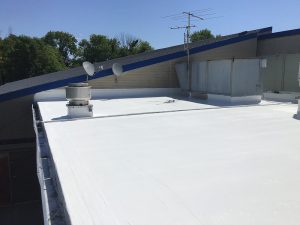
Sustainability in roofing is both material selection and energy performance. Light-colored membranes reduce cooling loads, which small and mid-size warehouses can benefit from immediately in summer months. Re-covering over an existing roof saves landfill space but only when moisture is not trapped. Metal roofs are highly recyclable and can last decades, lowering replacement frequency. Triple W evaluates energy goals and recycling options during proposals, and where possible suggests materials that lower operating costs without compromising durability.
When to replace rather than repair
There are clear signals that replacement is the prudent decision. Multiple repairs within a short period, significant moisture saturation revealed by infrared scans, severe membrane degradation across large areas, and roofs nearing or past their expected service life all point to replacement. If you repair a roof that has widespread membrane issues, you end up paying repeatedly for patch work and eventually a replacement anyway. A well-timed replacement interrupts that expense cycle. Triple W works with owners to model the break-even point between ongoing repair costs and replacement investment, using real-world repair history and current material pricing.
Why local experience matters
Montgomery, Indiana sits in a climate of hot humid summers and freeze-thaw winters with spring storms that can be intense. Those cycles stress membranes and flashings differently than coastal wind-driven systems or arid-region roofs. A contractor who has walked these roofs knows which flashing details fail first, how snow sheds on particular roof geometries, and how local supply chains affect lead times. Triple W's local work history gives them practical foresight on material choices and scheduling that national firms may not have.
Final persuasive note
When you treat a commercial roof as a critical asset rather than an overhead line item, choices change. You accept a slightly higher initial outlay for a correct system rather than chasing the cheapest band-aid. You insist on documented surveys, clear warranties, and predictable maintenance. You pick a contractor who communicates, coordinates with tenants, and can show the work. For property owners in Montgomery and nearby communities, Triple W Roofing LLC brings that combination of practical experience, safety-first practices, and local knowledge, with an emphasis on long-term value rather than quick fixes. If the goal is to protect the building, the people inside it, and the investment it represents, the right roofing partner matters.
Triple W Roofing LLC
Montgomery, IN, USA
+1 (812) 787-2599
[email protected]
Website: https://triplewroofing.com